

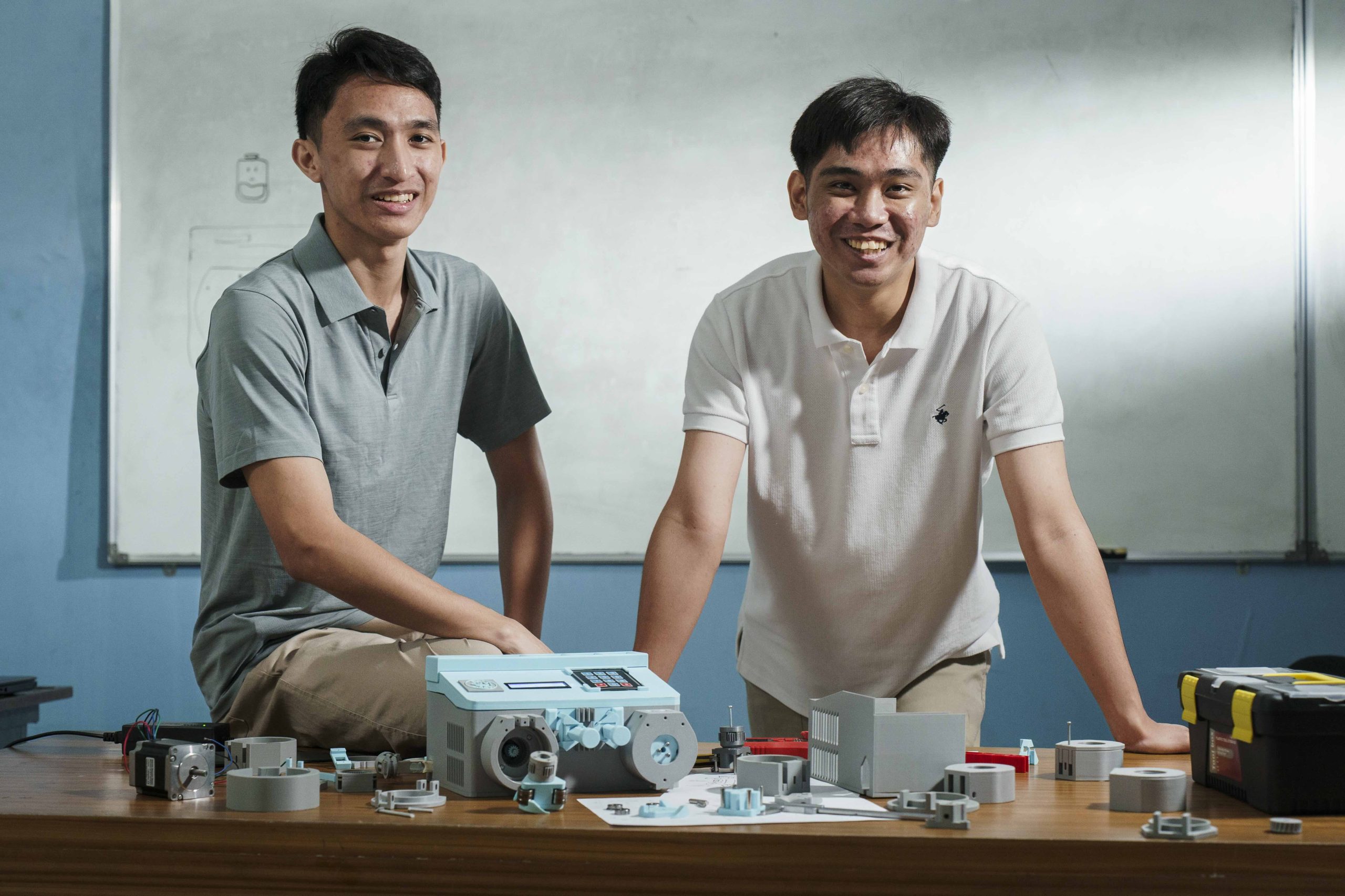
PRESS RELEASE: UP Diliman graduates win PHL stage of James Dyson Award for low-cost home dialysis machine
The 2025 James Dyson Award Philippine national prize goes to inventors of a low-cost, semi-automated machine to make home-based peritoneal dialysis more accessible for patients with kidney disorders.
Andrew Jacob Buensalido and Allyson Cabrestante, graduates of the University of the Philippines Diliman, have been named the Philippine national winners of the 2026 James Dyson Award for BiDaKidney, a low-cost, semi-automated machine designed to make peritoneal dialysis treatment simpler, safer, and more accessible at home.
The international design competition celebrates young problem-solvers who use engineering and design to address real-world challenges. Now in its 21st year, the James Dyson Award has supported more than 400 inventions with over £1.5 million in prize money, operating across 28 countries and regions.
BiDaKidney, alongside national runners-up Sentinel and OrthoFlex, will progress to the internationa stage for a chance to win ₱2,390,230. A global team of Dyson engineers will select the international Top 20 shortlist, to be announced on 14th October. James Dyson will then choose the global winners, who will be announced on 4th November.
Simplifying at-home dialysis
For many Filipino patients and families living with kidney disease, dialysis is not a one-time procedure but a demanding part of everyday life. Regular treatments can mean recurring costs, repeated travel to dialysis centers, hours spent receiving care, and sustained support from family members and caregivers. This burden is growing: the number of people undergoing dialysis treatment in the Philippines reached 64,845 in 2024, a 22% increase from 53,296 in 2023. Kidney disease also remains among the ten leading causes of death in the country.
BiDaKidney responds to this challenge by improving how peritoneal dialysis (PD) can be managed at home. Unlike hemodialysis, which typically filters blood through a machine in a dialysis center, PD uses the lining of the abdomen as a natural filter and can be carried out outside a clinical setting. This gives the patient greater flexibility, but it still requires fluid exchanges, monitoring, and record-keeping. As such, the process has remained highly manual, repetitive, and susceptible to error.
BiDaKidney is designed to automate key steps of this process to manage the flow of dialysis fluid, which could help make PD treatment easier to manage for patients and caregivers.
The machine works with standard PD supplies, using a controlled pump and built-in weight sensors to move dialysis fluid and track fluid volume during treatment. This reduces the need for patients and caregivers to manually manage the flow of dialysis fluid, repeatedly handle tubing, and record fluid volumes by hand, helping lower manual work, contamination risks, and record-keeping burden at home.
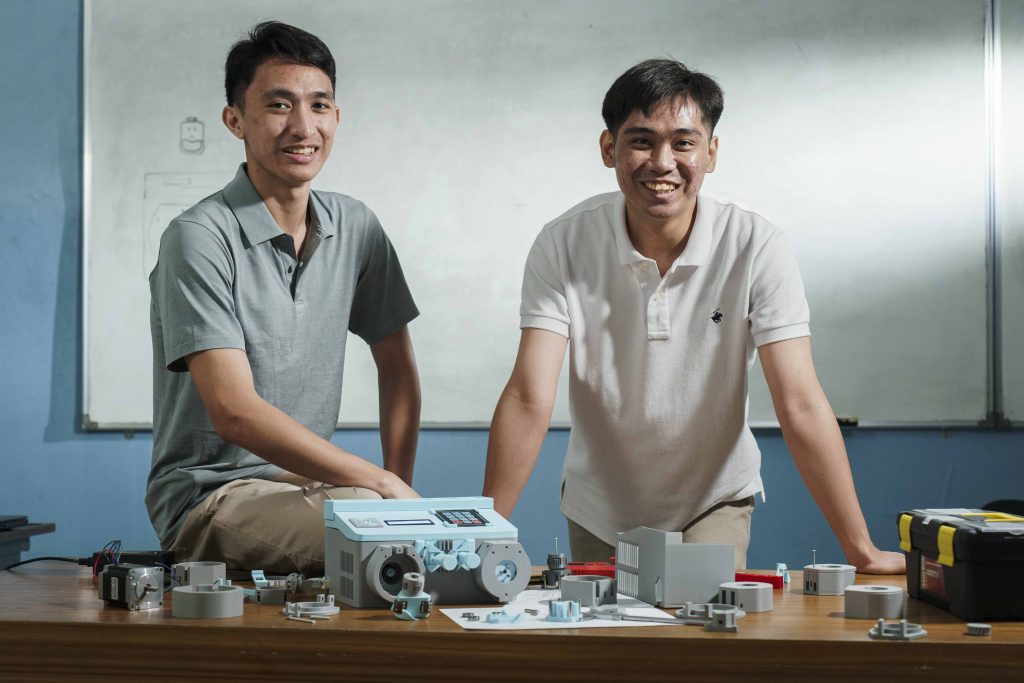
Michael Recinto, Senior Engineering Manager at Dyson and James Dyson Award Philippines National Judge, said: “BiDaKidney shows disciplined problem-solving. The team looked closely at how peritoneal dialysis is managed at home, then used engineering to reduce manual steps and improve monitoring without moving away from supplies patients already use.
That practical thinking, supported by repeated testing and refinement, is exactly the kind of design process the James Dyson Award aims to recognize.”
The idea was shaped by the team’s exposure to the realities of dialysis care in public healthcare settings, where patients often face long-term treatment costs, frequent clinic visits. For Andrew and Allyson, BiDaKidney is about easing the day-to-day demands of PD and giving patients and caregivers a more manageable way to continue treatment at home.
“When we started BiDaKidney, we were thinking about how we could help patients spend less of their lives managing dialysis and more of their time living it,” Buensalido said. “If treatment at home can become simpler, safer, and cheaper, patients may be able to continue their care with greater confidence and independence, while easing some of the responsibility carried by their families. Winning the James Dyson Award national prize gives us the opportunity to keep working toward that goal.”
BiDaKidney takes home ₱398,280 from the James Dyson Award national prize to support its next steps in development and commercialization.
“The award means a lot because it helps us continue building BiDaKidney with the people who may need it one day in mind. There are still many things we want to improve, and the prize gives us room to do that work properly. Our hope is that BiDaKidney can eventually give families another way to manage dialysis care with more confidence at home,” remarked Cabrestante.
Following positive feedback from PD nurses and nephrologists at a tertiary government hospital, Andrew and Allyson plan to refine the machine’s usability and safety features, explore battery-powered operation for local power interruptions, and prepare for formal clinical testing and broader patient evaluation.
Dr. Joel Joseph S. Marciano, University of the Philippines Vice President for Research and Innovation and James Dyson Award Philippines National Judge, said: “BiDaKidney demonstrates how innovative engineering can help address practical challenges in healthcare. By rethinking how peritoneal dialysis can be managed at home, Andrew and Allyson are developing an approach that responds to a real challenge faced by patients and their families while supporting the wider healthcare system. It is an example of innovation grounded in real-world needs and focused on improving healthcare outcomes for Filipinos.”
Monitoring building defects
Existing structural damage monitoring methods, such as concrete coring and visual inspections, can be slow, intrusive, and reactive. Damage may only be identified after it has worsened, and repairs have become more costly. In earthquake-prone areas, undetected structural weaknesses can also put buildings at greater risk of failure, leading to major property damage and loss of life.
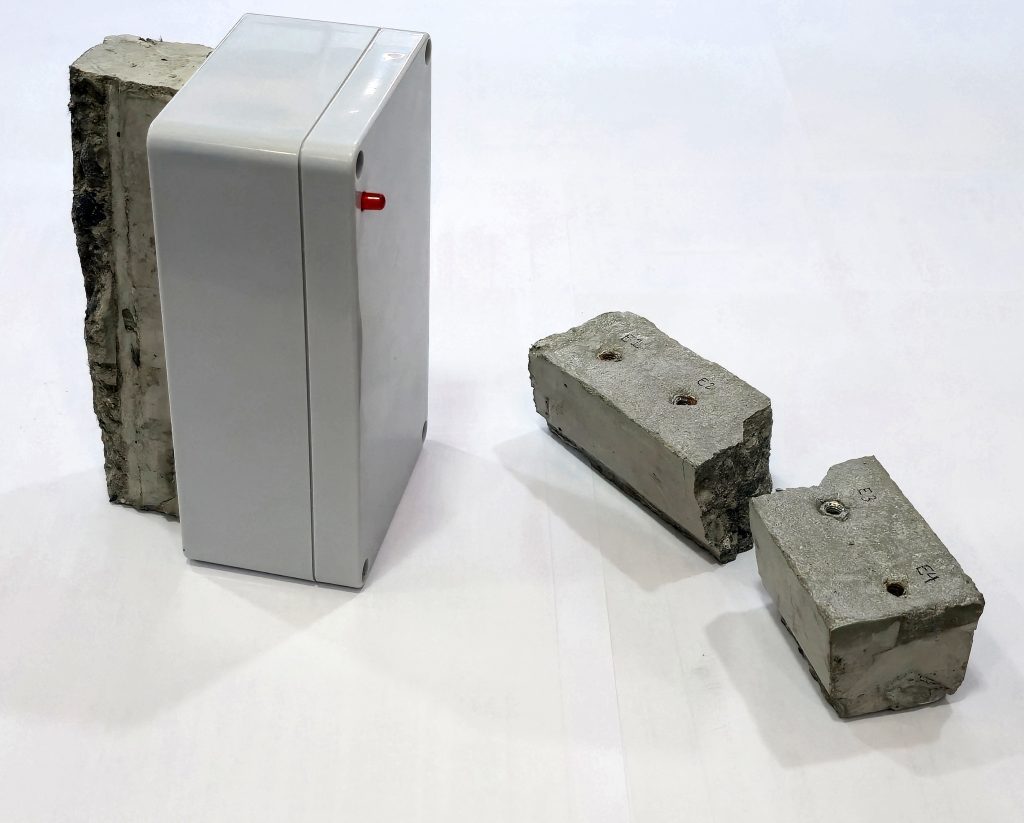
Sentinel is a building damage sensor that turns concrete spacer blocks into smart sensors. By adding conductive materials such as graphene and carbon fiber, the block can send measurable electrical signals when the concrete is damaged, helping connect a building’s structural health to an online monitoring system for earlier, remote detection.
Supporting post-stroke mobility
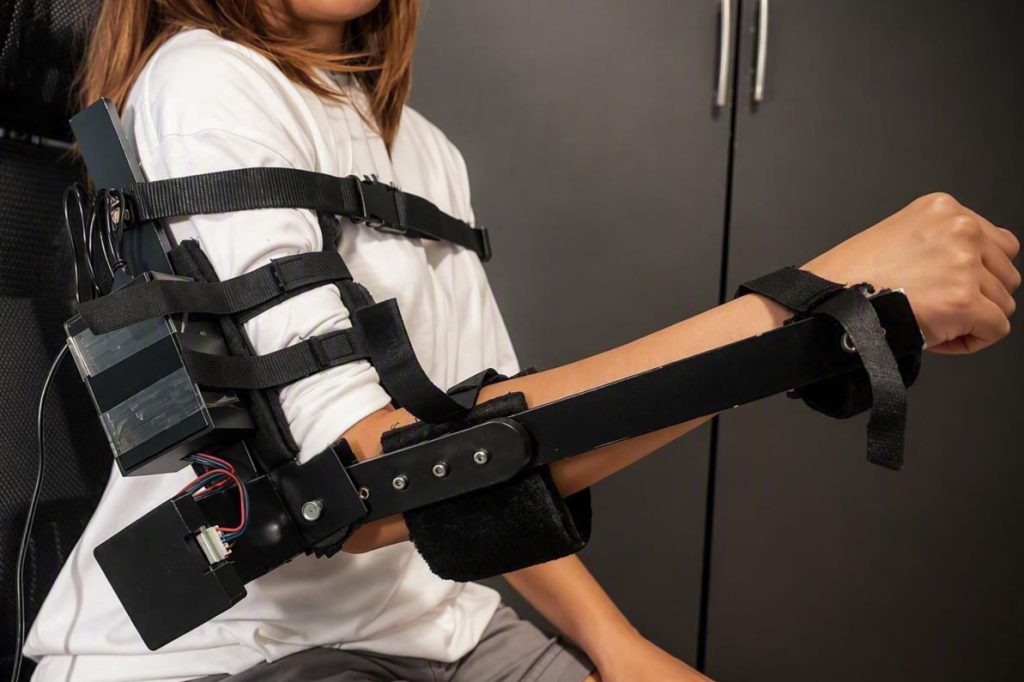
Stroke survivors may need ongoing rehabilitation support after leaving the hospital, but regular therapy can be difficult to access, especially when services are concentrated in urban areas, costly, or dependent on therapist availability. OrthoFlex is a portable, robot-assisted elbow rehabilitation device designed to support safe, repeatable elbow movement that can complement rehabilitation with a physical therapist.
It has adjustable arm supports and a wireless mobile interface that patients and caregivers can use in clinics or at home, helping make rehabilitation support more accessible outside traditional therapy centers.