
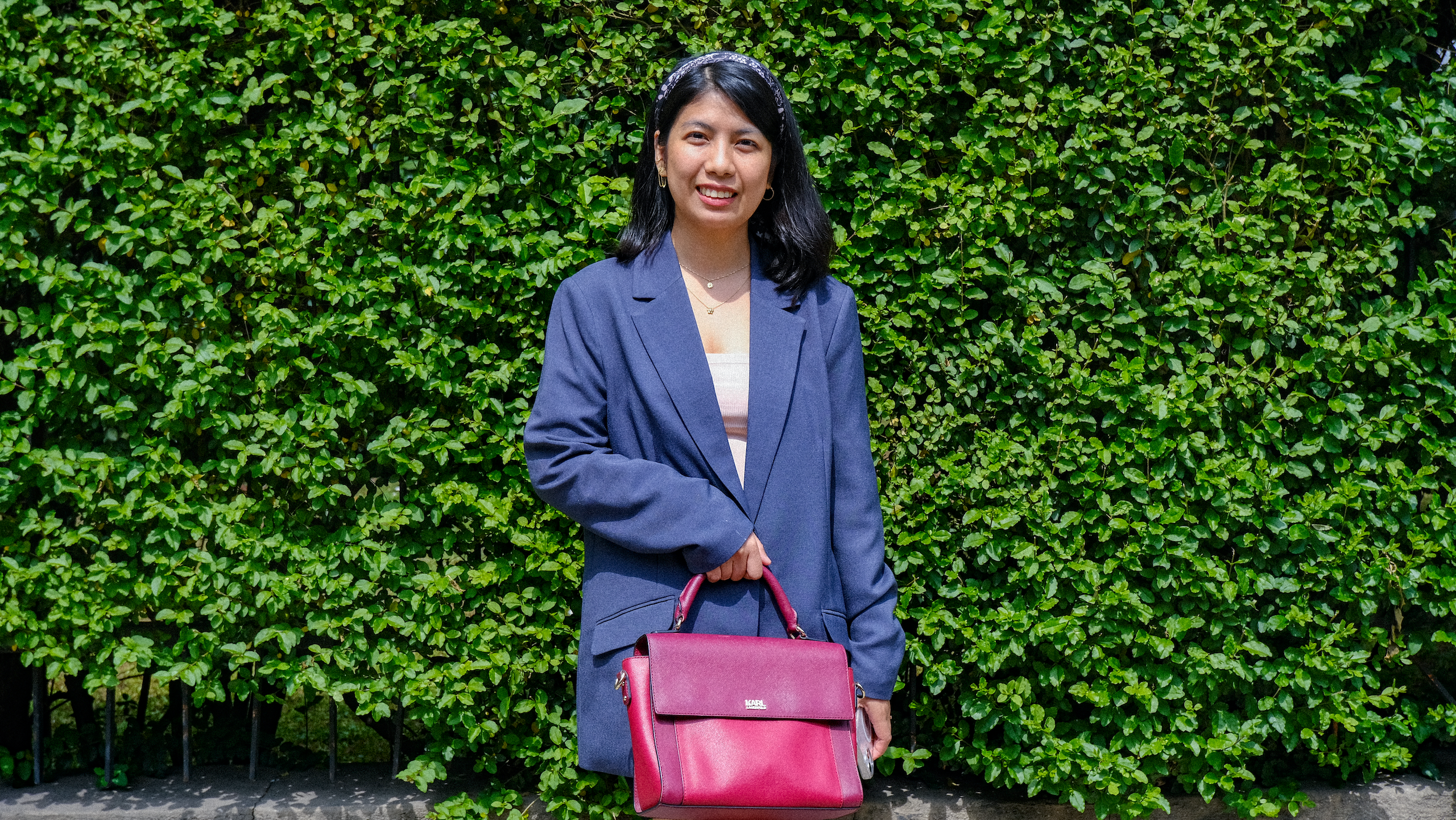
Meet the Ologist: Johanna San Pedro helps future-proof Filipino forests
Seeing as she has a bachelor’s degree in Forestry, a master’s degree in European Forestry, and a second master’s in Spatial and Ecological Modelling, one might expect that Johanna San Pedro had always planned to pursue her current field of study. After all, the Filipino researcher has dedicated nearly two decades of her life to understanding forest ecology, and continues to do so through her work at the International Institute of Applied Systems Analysis (IIASA) in Vienna, Austria.
The truth, like twisting branches on a tree, is a lot less straightforward.
“When I was choosing what degree to take, Forestry wasn’t even on the list.” When San Pedro began her undergraduate studies at the University of the Philippines Los Banos, she had considered BS Forestry as more of a “stepping stone”, just something to do before shifting to the program she actually wanted to take.
Unbeknownst to her, she’d already found what she thought she’d been looking for. After just one semester, her whole outlook on the field shifted.
The human side of forestry
When asked what made her stick with forestry after that first semester, San Pedro was prepared with a veritable laundry list of things that fueled her passion for the field. “I loved how my work wasn’t just tied to a computer.” Instead, she got to explore forests around the country. By witnessing wildlife both thrive and reel from threats, she gained a deeper understanding of ecological interactions while crawling through the foliage.
On a deeper level, San Pedro holds a strong interest in how forestry can connect people and the planet. Through working on the Integrated Natural Resource and Environmental Management Project in the Philippines, she was drawn to how different communities would have different methods of caring for the environment, and found there were insights to be gained from each unique approach.
Beyond the fascinating flora and fauna, San Pedro’s work also allowed her to meet and collaborate with upland communities and indigenous groups. “In the Philippines, we are focused on community-based forestry and the role of indigenous communities as de facto managers of the forest,” she said.
While all of us will be affected by the impacts of continuous forest degradation, the indigenous communities are those who feel the consequences most directly and severely. For San Pedro, it was important to consult and actively involve these groups in the decision-making process, as they lent much-needed field-level insights on the practicalities of policies and the suitable implementation of projects.
From greens to graphs
These days, San Pedro’s work is less boots on the ground, and more tables and charts. Whereas she was once often on-site, looking into how ecological policies could help the development of local communities, a typical day now involves gathering and processing datasets, running models, and interpreting forest fire patterns.
Together with IIASA’s wildFire cLimate impacts and Adaptation Model (FLAM) team, San Pedro assesses forest fire risks and investigates how climate change affects wildfire behaviors. FLAM also looks into how wildfires impact ecological benchmarks like biodiversity, carbon storage, and biomass. Their research is meant to support policymakers in making more informed decisions that align with climate goals and active environmental interventions as well as importantly respond to the dynamic needs of the ecosystems most under threat.
The transition to research work required San Pedro to develop a set of skills that were different from the ones she’d grown accustomed to. Data analysis, data modelling, scientific writing, and working across multiple disciplines were suddenly of paramount importance, and as someone from a developing country, she felt as though she had to prove that she could work at the same level as her peers in a highly technical and global field.
“Researchers in developing countries often have fewer resources, less exposure to advanced tools, and fewer opportunities for large-scale international collaboration compared with those in more established research environments,” she said. Despite the pressure to perform, San Pedro believes the move to IIASA is what ultimately allowed her to grow, and challenged her to keep learning, adapting, and building confidence in her own expertise.
Bridging the gap
While her current work is important, it’s a far cry from what made her fall in love with forestry in the first place. But to San Pedro, the move to research was necessary, as she wanted her work to have broader reach and produce results with more meaningful impacts on our ecosystems.
The first step toward broadening the impact of her work was pursuing her Master’s degree in European Forestry. “European policy is increasingly tied to ecosystem recovery, biodiversity, and forest conditions,” San Pedro explained.
In contrast, Philippine policies tend to focus on rehabilitating degraded forestlands, most often through tree planting projects. “We should consider that planting trees alone does not guarantee climate-resilient forests,” she added. While meeting planting targets in key green areas is a step in the right direction, adding the wrong types of vegetation to an area already at risk of catching fire is akin to adding kindling to a flame.
In a paper published by San Pedro and FLAM in 2024, they noted that “forests are the vegetation class most at risk of burning.” They developed models that predicted temperature changes and evaluated weather patterns, projecting how different types of vegetation in different areas might affect how quickly a forest fire could grow and spread through the area. These are just some factors that influence the sustainability and health of forests, yet are at times overlooked in local policies.
By understanding Europe’s technologies for monitoring forests and policies for tracking biodiversity and ecological outcomes, San Pedro hopes to one day facilitate the transfer of her acquired knowledge to foresters in the Philippines.
Future-proofing Philippine forests
Forests are the lungs of a nation. As the Philippines is one of the most populated countries and one of only 17 megabiodiverse countries in the world, there is a responsibility to ensure those lungs are healthy for the country’s vast biosphere.
San Pedro recalled Philippine forestry being very visible on the ground when she worked in the country, with fellow Filipino foresters being active in site assessments, planting activities, and government-led environmental programs. She specifically mentioned the Department of Environment and Natural Resources (DENR), the Ecosystems Research and Development Bureau (ERDB), and universities such as UP Los Baños College of Forestry and Natural Resources as local institutions at the vanguard of local forestry and ecology.
San Pedro also recognized that the availability of proper research infrastructure and long-term funding in the country was limited compared to her overseas experience. Shifting more effort toward research allows for better long-term decision-making when it comes to land management, complementing insights from the field and local communities, even if this approach may not yield the short-term fixes policymakers are often after.
However, times are changing, and the depletion of natural resources compounded by climate change means that the planet’s ecological health is currently at a critical point. San Pedro emphasized that the research-backed interventions in these areas are now more important than ever and will be especially vital in the years to come.
“Forestry and ecology are not only about the environment, but also about climate, food systems, livelihoods, and the future of communities,” she said. “If you choose this path, you are entering a field that has real value and real impact.”
Editor’s Note: This article includes perspectives of the interviewee, and not the position and views of the International Institute for Applied Systems Analysis.